


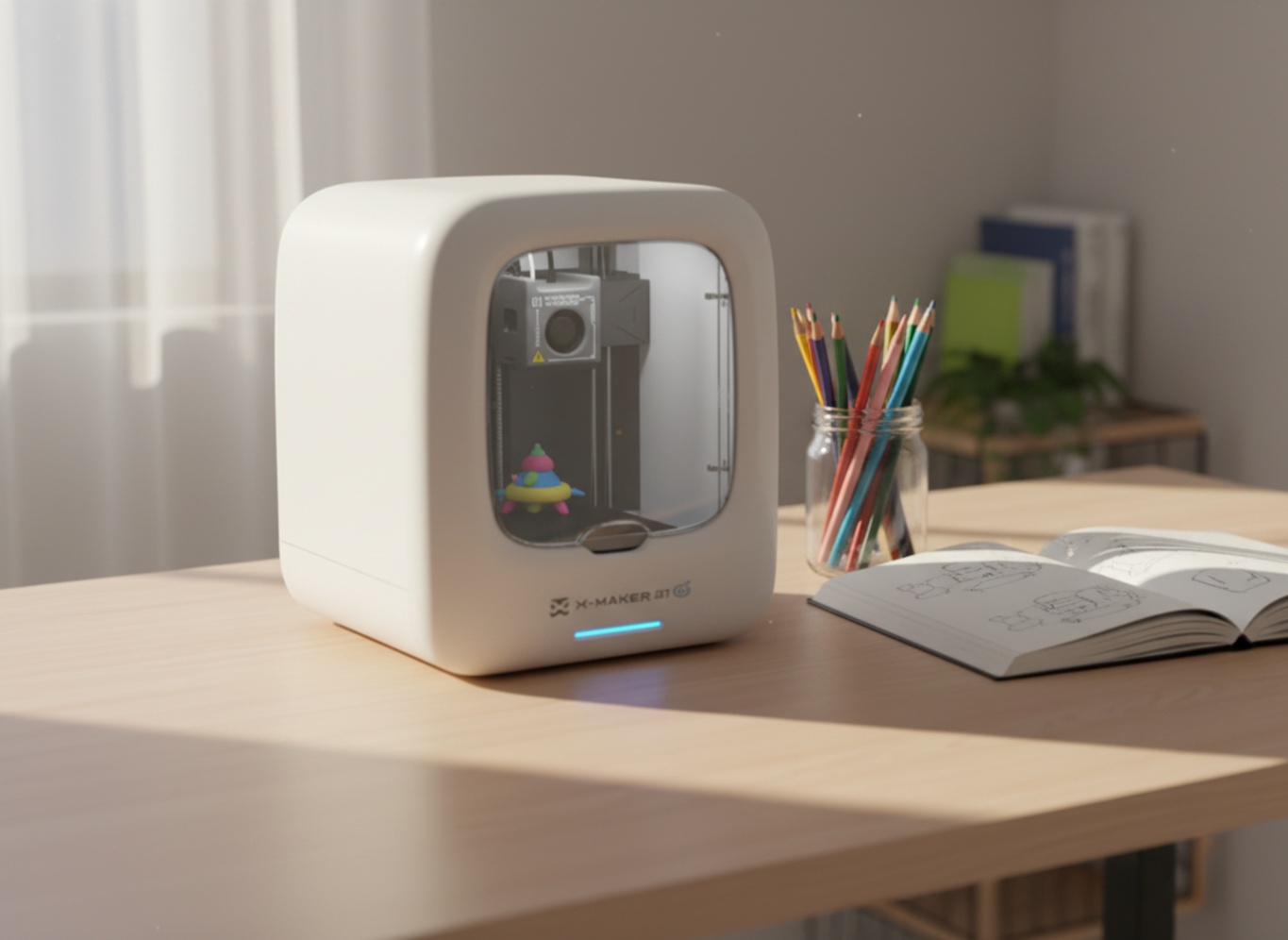
Do 3D Printers Use a Lot of Electricity? Facts & Figures
A 3D printer is the desk machine that sounds intimidating on the box and turns out to be boring on the electricity bill. The power supply rating reads like a space heater. The actual draw is closer to a desk lamp.
Parents shopping for one almost always ask about the power bill before buying. Skip that worry. Filament costs more by about fifteen-to-one. Time costs more than both.
|
TL;DR A home 3D printer pulls 50–250 watts. At the U.S. average of $0.17/kWh, an hour costs 2–4 cents. An overnight 8-hour print: about 25 cents. A heavy hobbyist clocking 100 hours a month adds maybe $3 to the bill. The bed is where 60–70% of the draw lives. PLA prints cheaper than ABS. A small enclosed printer beats a large open-frame one. Everything else is a rounding error. |
Do 3D Printers Use a Lot of Electricity?
An FDM (filament) printer running at full tilt pulls 50–250 watts. Resin printers run 30–150. Same band as desktop computers, modern TVs, and decent reading lamps. Nowhere near microwaves, hair dryers, or anything else likely to make a utility bill flinch.
The worry usually comes from reading the power supply rating off the spec sheet. That number is a ceiling, not an average. A 350W PSU is built to handle worst-case heating plus a safety margin. The printer rarely needs all of it, and never for long.
|
REALITY CHECK A 1,200W microwave doesn't draw 1,200W when it's idle. A 350W printer power supply doesn't draw 350W during a print. Spec-sheet wattage is what the device can handle — not what it uses. The two get confused all the time. |
How Does a 3D Printer Use Power?

Two heaters and a handful of motors. That's the whole story.
The heated bed pulls 60–70% of total draw. It's the platform under the print, holding 50–110 °C depending on filament. Bigger bed, more wattage. Hotter target, more wattage.
The hot end melts filament at the nozzle — 190–230 °C for PLA, hotter for engineering plastics. The surface area is small, so wattage is small. Around 30–50 watts on average.
Motors, fans, screen, mainboard combine to about 15 watts. Rounding error.
Power runs through three phases across a print:
- Heat-up. Bed and nozzle climb. Brief spike past 300W.
- Active print. Heaters cycle on and off. Steady 100–150W.
- Cool-down. Heaters off. Around 10W.
Most of the time, the bill is paying for that middle phase.
How Much Power Does a 3D Printer Actually Pull?

Numbers vary by model. Bands hold.
|
Printer Type |
Steady Draw |
Heating Spike |
Idle / Standby |
|
Small FDM (kid-friendly) |
50–120 W |
~250 W briefly |
3–6 W |
|
Standard FDM (desktop) |
100–250 W |
300 W+ briefly |
3–8 W |
|
Resin (SLA / LCD) |
30–150 W |
No bed spike |
5–15 W |
|
Large-format FDM |
200–500 W |
350–400 W |
5–10 W |
|
Industrial FDM (heated chamber) |
500–1,200 W |
800–1,500 W |
20–50 W |
Most families never touch the bottom two rows. A child's printer almost always sits at the top.
FDM vs Resin: Which One Wins?

On the electricity bill alone, resin. On everything else — material cost, mess, what's actually usable in a kid's room — FDM, easily.
A 2023 life-cycle assessment in the Polymers journal compared FDM and SLA printers head-to-head, and resin came out clearly more energy-efficient per gram of finished part. The reason is simple: resin printers don't have a heated bed, and the heated bed is where most of the power goes.
That said, raw efficiency isn't the whole conversation. Resin smells. It needs an isopropyl wash and a UV-cure stage after every print. Filament is cheaper per gram, easier to handle, less messy. For an adult hobbyist that tradeoff doesn't matter much. For a child's project, it matters a lot. Most families pay a tiny electricity premium for a much easier workflow.
Real Cost: Per Hour, Per Day, Per Month
The math is simple, and the U.S. Department of Energy spells out the formula: watts divided by 1,000, times hours, times the per-kWh rate. At the U.S. average of about $0.17/kWh, a 120-watt printer costs 2.4 cents an hour. Hardly a number worth remembering.
Here's what real prints actually cost in electricity:
|
|
Time |
Avg Watts |
Cost @ $0.17/kWh |
|
Small toy (keychain, ring) |
1 h |
90 W |
$0.015 |
|
Toy car or simple bracket |
4 h |
110 W |
$0.075 |
|
Helmet panel or vase |
8 h |
130 W |
$0.18 |
|
Overnight multi-part build |
12 h |
140 W |
$0.29 |
|
Heavy use: 100 h/month total |
100 h |
130 W |
$2.21/month |
A child printing one small toy a day after school adds about 50 cents to the monthly bill. That's not a typo.
|
WHERE THE COST ACTUALLY SHOWS UP Filament. Always filament. A kilo of PLA runs $15–$25. A heavy hobbyist goes through 2–3 kilos a month. That's $30–$75 in plastic against $2–$5 in power — roughly fifteen-to-one. Replacement nozzles, sticky bed sheets, the occasional cooling fan: another small line. If the budget question is real, it's filament that needs answering. |
3D Printer vs Household Appliances

Numbers in isolation don't land. Stack a 3D printer next to other things plugged in around the house — a desktop computer pulls a similar load, per Energy Star's computer specifications — and the picture shifts.
|
Appliance |
Typical Draw |
Cost / Hour @ $0.17/kWh |
|
Small 3D printer |
100 W |
$0.017 |
|
LED TV (50-inch) |
80 W |
$0.014 |
|
Gaming desktop PC |
350 W |
$0.060 |
|
Microwave (running) |
1,200 W |
$0.204 |
|
Space heater |
1,500 W |
$0.255 |
|
Electric clothes dryer |
3,000 W |
$0.510 |
Run a 3D printer for ten hours. Same electricity as one hour of space heating.
What Affects Power Draw the Most?

Four things matter, roughly in this order.
Bed temperature first — and it's not close. Each 10 °C step up costs more than the last, because hot surfaces lose heat to the room faster the hotter they get. This is the whole reason PLA prints cost a fraction of what ABS does. Different bed targets, very different bill.
Bed size sits right behind. A 300×300 mm bed pulls roughly twice the wattage of a 150×150 bed at the same temperature. Surface area math.
Then the filament itself. PLA lives in the cool, cheap end. ABS, ASA, and nylon want hotter beds and hotter nozzles. Polycarbonate is the most expensive material to run, by a good margin.
Last is whether the printer is enclosed. Closed door, trapped heat, bed cycles on less often. That works out to 15–25% off long ABS prints, plus better surface quality as a bonus.
Speed and complexity nudge things, but heating dominates. Everything else is small.
Rough temperatures and power impact relative to PLA:
|
Filament |
Bed Temp |
Nozzle Temp |
Power vs PLA |
|
PLA |
50–60 °C |
200–215 °C |
baseline |
|
PETG |
70–80 °C |
230–245 °C |
+10% |
|
ABS |
100–110 °C |
240–260 °C |
+25% |
|
Nylon |
70–80 °C |
250–270 °C |
+20% |
|
ASA |
100–110 °C |
240–260 °C |
+25% |
|
Polycarbonate |
110–120 °C |
280–310 °C |
+35% |
|
Quick cost benchmark for 3D printer power use An 8-hour PLA print on a small enclosed FDM printer at $0.17/kWh costs about 14 cents. The same 8 hours on an open-frame large-format printer pulling 250W with an ABS bed at 100 °C costs about 34 cents. Same time, more than twice the energy — almost entirely because of the bed. |
|||
How to Reduce 3D Printer Electricity Use

A few real things, none of them dramatic.
- Print PLA when you have a choice. ABS for stuff that genuinely needs heat resistance, PLA for everything else. That swap alone is the biggest single saver.
- Batch small prints onto one plate when you can. Three toys on one print is one heat-up cycle, not three. The first half-hour of any print is the most expensive part.
- Pick (or rig) an enclosure. Even a passive one — walls around the printer, no active heating — cuts power on long jobs.
- Drop the bed temp by 5 °C and test. If prints still stick, leave it there. If they don't, dial back up. Costs nothing to try.
- If your utility does time-of-use rates, run overnight prints. Some plans charge half what daytime power costs.
- Stacked, a hobbyist might save $3 to $5 a month with all of this. Worth doing on a setup that runs constantly. Not worth optimizing if you print twice a week.
When 3D Printer Energy Use Becomes a Concern
There are a few situations where the bill does start to register.
Large-format machines, for one. A 500W+ printer with active chamber heating burns roughly ten times what a small kid-friendly printer does. If you're running one of those, the math is a different conversation.
Print farms are the other case. Five printers in parallel for 12 hours a day adds $30 to $60 a month. That's small business territory, not hobby.
And constant ABS or polycarbonate work, day in and day out, pushes consumption noticeably higher than the same hours on PLA — the bed temps are just too different for it not to.
None of these apply to one printer in a kid's room.
Is It Safe to Leave a 3D Printer Running?
Short prints under four hours, basically yes — same way you'd leave a microwave running while you walk into the next room. Long prints (overnight, multi-day) are also fine, but with a few habits worth building.
Put the printer somewhere you can hear it. A working printer makes a steady mechanical sound; if it goes silent or starts grinding, that's worth checking on. Keep a working smoke alarm in the same room — not optional. Don't store flammable stuff within arm's reach of the heated bed. Keep the firmware updated. Basic electrical safety habits apply here the same as any other appliance. And if children are around, an enclosed build area is the easy default.
The hobby has run for two decades on those basic precautions. The safety record is reassuring.
How to Choose an Energy-Efficient 3D Printer

Five criteria worth weighing:
|
Criteria |
What to Look For |
|
Build volume |
Smaller is more efficient. 120–150 mm³ is plenty for kids' prints. |
|
Enclosure |
Closed printers cycle the bed less often. 15–25% savings on long prints. |
|
Filament range |
PLA-friendly printers run cooler than ABS-focused ones. |
|
Standby behavior |
Some printers idle at 3W; others at 15W. Multiply by hours sitting on. |
|
Quick-heat bed |
Faster heat-up means less time in the high-draw spike phase. |
For families with younger kids, the right answer is almost always a compact, enclosed FDM printer designed for the age group. Smaller bed. Lower temps. Quieter. Lower bill.
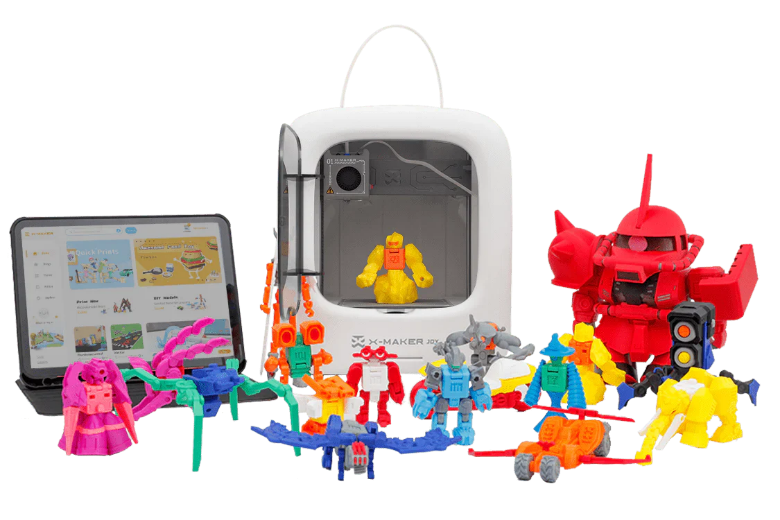
A starter 3D printer for younger creators — the AOSEED X-MAKER JOY, with its 120×120×120 mm build area — fits this whole list, and it sits in the broader beginner-friendly 3D printers for kids collection if you want to compare options.
|
BOTTOM LINE 3D printers don't use much electricity. Most prints cost pennies. A heavy month tops out around three dollars. Filament costs roughly five times more than power, and time costs more than both. |
Conclusion
Here's where this lands: if the electricity bill was the thing holding you back, let it go. A printer in a kid's room costs a few dollars a year to run — the filament and the time cost far more. Most months you won't even notice it on the statement. It sits somewhere between a desk lamp and a game console, and nobody loses sleep over those.
What actually matters is the stuff nobody asks at the store: noise, placement, supervision, and whether the projects keep getting used after the first week. A printer that's too loud for a bedroom, too fiddly for a kid to run alone, or too slow to stay interesting doesn't get used — and the one gathering dust in a closet was never really cheap, no matter what it pulled from the wall.
That's the real question, and it's exactly whyAOSEED's family-ready 3D printer lineup is built the way it is — small, quiet, enclosed, easy to live with. The kind of machine a kid can actually operate, that fits on a shelf without taking over the room, and that's simple enough to still feel fun a few months in.
So don’t fixate on the wattage number. Pick for the life you'll actually have with it — the noise you can tolerate, the space you've got, the help a child will or won't need. Get that part right, and the power bill takes care of itself.
FAQs
Do 3D printers make your electric bill go up?
Honestly, no. Print a couple times a week and you might add a dollar or two over the whole month.
How much does it cost to run a 3D printer for 1 hour?
A few cents. A 120-watt printer works out to about 2.4 cents an hour — not worth losing sleep over.
Do 3D printers require a lot of energy?
Not really. About the same as your TV or laptop, nowhere near a microwave or dryer.
Is it okay to run a 3D printer for 24 hours?
Yeah, that's common. Just keep it where you can hear it, smoke alarm in the room, enclosed model if kids are around.
What are the disadvantages of using a 3D printer?
The learning curve and the wait. Prints fail early on, filament adds up, and even a small one takes hours. Electricity isn't on the list.
Can I legally sell 3D prints?
In general, you should not sell designs that use protected trademarks like Marvel or Pokémon characters unless you have explicit permission
How many hours will a 3D printer last?
Most go 1,500 to 3,000 hours before a cheap part needs swapping. The motors and frame last years past that.
Which printer is the cheapest to run?
Small ones. Resin printers and compact FDM machines both keep you at a few bucks a month, max.
Sources
- U.S. Energy Information Administration, "Electricity Rates by State." Monthly residential rate data.
- U.S. Department of Energy, "How to Estimate Appliance Energy Use."
- Energy Star, "Certified Computers Specification."
- MDPI Polymers, "FDM vs SLA Energy Consumption Study." Peer-reviewed, 2023.
- NIST, "Office of Weights and Measures." Electrical measurement standards.
- NFPA, "Smoke Alarm Safety Guide."
- CPSC, "Electrical Safety Guide."
- International Energy Agency, "Energy Efficiency Overview."


You may also like
X-MAKER JOY:AI-Powered ToyMaker 3D Printer for Kids
AOSEED X-MAKER: Kid-Friendly AI-Powered 3D Printing Revolution
Further reading

Open vs Enclosed 3D Printers for Kids: Parent Comparison

How to Clean and Maintain a Kids 3D Printer in the School

What Parents Should Know Before Buying a 3D Printer for a Kids


